

Blackhorn Ventures · Investment announcement
Blackhorn Invests in OnPeak Intelligence; Decision Intelligence for an Era of Weather Volatility
Today we're announcing our investment in OnPeak Intelligence, a weather decision intelligence platform for utilities, data centers, and other critical infrastructure owners. Blackhorn Ventures joined Powerhouse Ventures in OnPeak's $3M pre-seed.
Weather is behind roughly 80% of U.S. power outages, according to the Department of Energy. Yet most operators still make their highest-stakes weather calls by stitching together forecasts, spreadsheets, and instinct. OnPeak is building the layer that turns weather data into a defensible operational decision.
Weather is the dominant cause of U.S. power outages
Share of U.S. power outages attributed to weather
Source: U.S. Department of Energy, as cited in the text. The 20% remainder is the complement of the “roughly 80%” figure.
The problem: the stakes are rising faster than the tools
Extreme weather is getting more frequent and more expensive. According to Climate Central, 2025 was the third-highest year on record for billion-dollar weather disasters in the U.S., with 23 events causing roughly $115B in damages. Since 1980, the country has endured 431 such events and more than $3.1T in losses.
Billion-dollar weather disasters in the U.S.
2025 vs. cumulative since 1980
Source: Climate Central, as cited in the text. Bars are drawn to scale within each row. One year accounts for 23 of 431 events (~5%) and ~$115B of $3.1T+ (~4%).
For electric utilities, the consequences are perhaps most concrete: wildfire, hurricane, and winter storm responses have led to lawsuits, regulatory investigations, and bankruptcies, including PG&E's $13.5B wildfire settlement. At the same time, regulators in a growing number of states now expect weather-informed mitigation plans as a condition of liability protection and rate recovery.
The forecasts themselves are not the bottleneck. There is no shortage of weather feeds and models. The gap is between the data and the decision: whether to de-energize a circuit, where to stage crews, or how to document why a call was made. In our conversations with utility meteorology teams, we heard the same picture repeatedly: dozens of open tabs and spreadsheets across vendors and internal models in the hours before a major event, and no single workflow connecting weather, outage risk, and operations.
The gap is between data and decision
Where the workflow breaks today, and where OnPeak sits
Weather exposure across sectors
Energy & Power is where OnPeak is starting
Energy & Power
70% of electricity volatility is weather-driven. Utility exposure: $150B+/year.
Built & Digital Infrastructure
$80B/year in cooling costs and outage risk.
Transportation & Logistics
$32B/year in freight-delays in the US alone.
Insurance
$150B/yr in weather-related insured losses.
Industrial & Manufacturing
$3B+/year in freeze events and heat-stress shutdowns.
Government & Military
$1.5B+ in installation damage over the past decade.
Stated annual exposure by sector ($B)
Same figures as the cards above, drawn to scale
Figures as stated in the original sizing graphic. They are not strictly comparable: Insurance is insured losses, Government is cumulative over a decade, and the Energy figure is utility exposure.
What OnPeak does: from weather data to a defensible decision
OnPeak ingests multiple weather forecasts and sensor observations, transforms them into high-resolution, probabilistic weather intelligence, and translates that intelligence into business risk. Its technical core pairs physics-based weather modeling with AI, so the system stays grounded in the physics of the atmosphere while running fast enough to be useful when hours matter. Every customer is supported by an expert-in-the-loop who helps them act with confidence on time-sensitive decisions.
How the platform works
From raw inputs to business risk, with an expert in the loop
Quantify: outage risk by circuit, next 48 hours
Example output from OnPeak’s site. One square per circuit, showing outage probability (%).
P10 28 · P90 61 · 84 circuits
Source: example figures shown on onpeakintel.com; illustrative, not customer data.
Guide: from flagged event to restoration
Example guidance timeline. P is the stated probability at each step.
- T−72hEvent flagged, analogs ranked
P 0.64 - T−48hPre-stage 12 crews, north region
P 0.78 - T−24hOpen EOC, notify key accounts
P 0.86 - T−6hFast-trip settings on 9 circuits
P 0.91 - T+12hRestoration briefing, live updates
Source: example figures shown on onpeakintel.com; illustrative.
The initial focus is utility wildfire risk, including decisions about Public Safety Power Shutoffs. OnPeak's wildfire suite covers the full lifecycle of those decisions:
Identifies where wildfire exposure exists, to inform long-term planning.
Quantifies the financial and operational impact of that exposure.
Delivers real-time, circuit-level support during an event, including when and where to de-energize.
Records forecasts, decisions, and outcomes for regulatory compliance and post-event review.
Turns that history into simulations and training so operators are better prepared next time.
The products reinforce one another: every event improves the record, the record improves training, and better-prepared operators make better calls in the next event. From there, OnPeak plans to extend the platform to other severe weather and to weather-exposed infrastructure.
The wildfire suite as a flywheel
Each event feeds the next
Why we invested
Three things stood out.
A decision layer, not another data feed.Forecast providers, wildfire-behavior tools, and grid analytics platforms each cover part of the picture, and many of them rely on outside weather inputs. OnPeak is building the layer in between, one that connects high-resolution weather intelligence to operational workflows and records how each decision was made. In our diligence, utility practitioners were clear that pre-event decision support is underserved, and that more competition and innovation in this category would be welcome.
Early traction in a hard market.Enterprise utility sales cycles are long, so early signals matter. OnPeak already has a contracted utility engagement, federally funded awards supporting platform development and weather risk applications, and an active pipeline spanning large investor-owned utilities and other weather-exposed customers.
Real-world impact.The prize is fewer ignitions, fewer and shorter outages, safer crew staging decisions, and more resilient communities in fire-prone areas. Better weather decisions also make the grid more efficient and reliable, which is central to how we think about impact at Blackhorn.
We also see a natural fit with what we can offer. Through our network of utility and infrastructure relationships, we’re helping OnPeak reach customers, sharpen their go-to-market and pricing as it scales, and build the investor syndicate for the next round.
The team
OnPeak's co-founders have spent their careers where meteorology meets energy, with experience spanning PG&E, the National Center for Atmospheric Research (NCAR), Ascend Analytics, Tomorrow.io, E Source, and Equilibrium Energy.
- PG&E
- NCAR
- Ascend Analytics
- Tomorrow.io
- E Source
- Equilibrium Energy

Kevin Clifford
CEO
Spent seven years on PG&E's operational meteorology team supporting utility weather and wildfire operations, and previously co-founded Equilibrium Energy. He has lived the problem OnPeak is solving from the customer's side of the table.
PG&E’s head of wildfire meteorology, who worked with Kevin for a decade, characterized him as ‘the real deal’ and said that if there were ‘Kevin Clifford stock’ he ‘would invest half my savings into it,’ emphasizing both Kevin’s deep utility meteorology experience and his ambition to build more expansive solutions than incumbents.
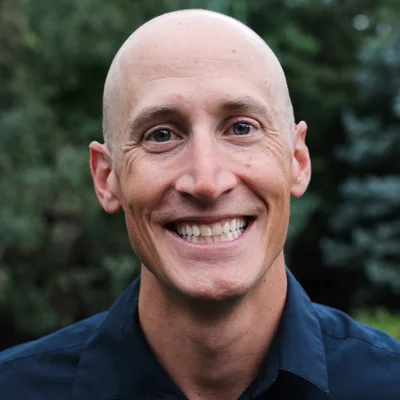
Tyler McCandless
CTO
A PhD meteorologist who has worked at NCAR, Tomorrow.io, and Equilibrium Energy, with deep expertise in machine learning for weather modeling and forecasting systems.
An NCAR senior scientist and former academic advisor described Tyler as ‘one of the best’ ML‑driven forecasters in his career, highlighting that Tyler simultaneously completed his BS, MS, and PhD at Penn State, published peer‑reviewed work as an undergraduate, and led DOE‑funded short‑range solar forecasting research whose methods are still in operational use.
That pairing of operational credibility and technical depth is rare, and it is why we were eager to back them at the earliest stage.
What's next
The $3M pre-seed will fund the team's next phase: growing the technical and commercial team, building out the product suite, and converting early utility engagements into recurring customers.
Backed by


Research supported by



We're grateful to the team at Powerhouse Ventures for leading the round and for being great partners. Congratulations to Kevin, Tyler, and the entire OnPeak team. We look forward to helping them transform decision-making to make the inevitability of extreme weather less costly.


